

In der letzten Zeit sind u.a. diese frei verfügbaren Titel erschienen:
Digital Humanism: First Interdisciplinary Science and Research Conference, DIGHUM 2025, Vienna, Austria, November 20–21, 2025, Proceedings
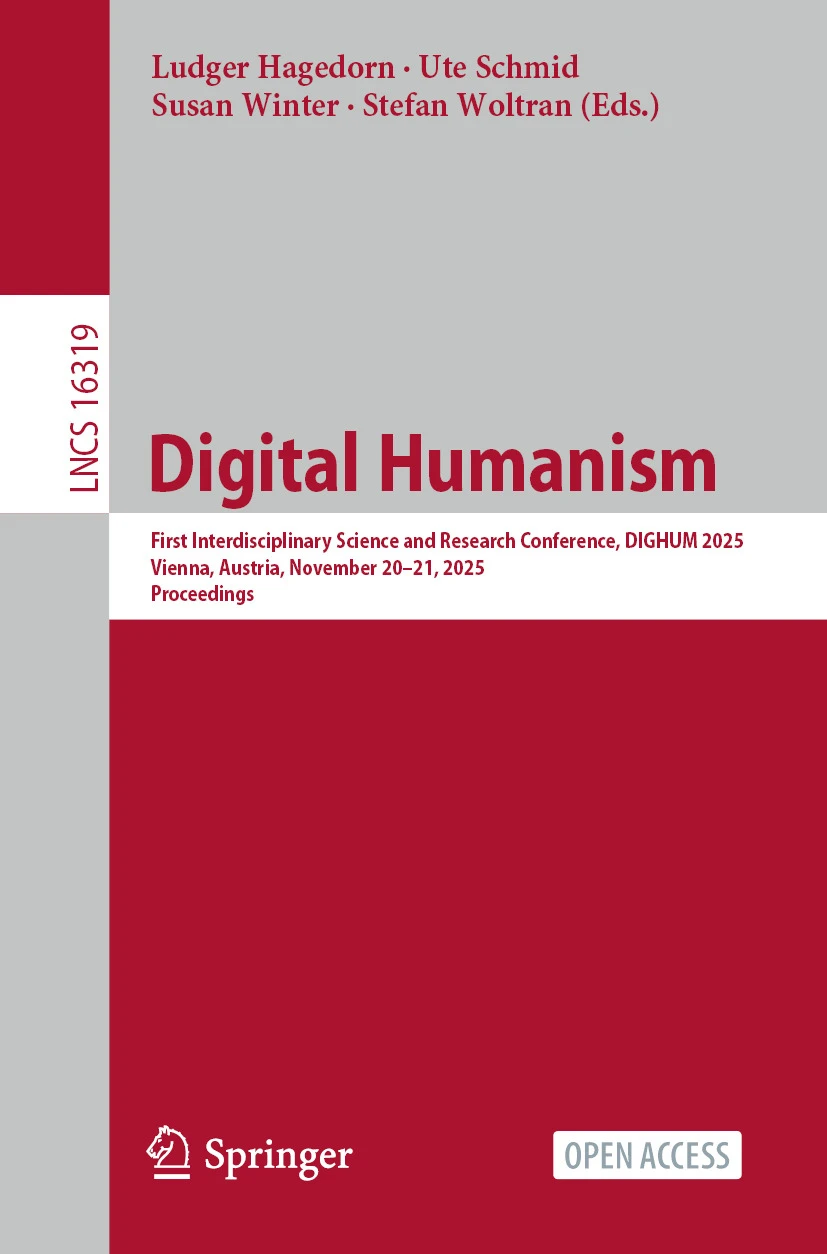
Ludger Hagedorn, Ute Schmid, Susan Winter & Stefan Woltran (Hrsg.)
https://doi.org/10.1007/978-3-032-11108-1
This open access volume constitutes the proceedings of First Interdisciplinary Science and Research Conference on Digital Humanism, DIGHUM 2025, Vienna, Austria, during November 20–21, 2025.
The 30 full papers and 12 short papers included in this book were carefully reviewed and selected from 98 submissions. They were organized in topical sections as follows:
1) Digital Humanism Reshaping Computer Science,
2) Digital Humanism: Ethical and Legal Aspects,
3) Digital Humanism in Political and Social Sciences, and
4) Breaking Interdisciplinary Silos: Digital Humanism Across Disciplines.
From Global to Local? Digitale Methoden in den Geisteswissenschaften im deutschsprachigen Raum: Ein Triptychon
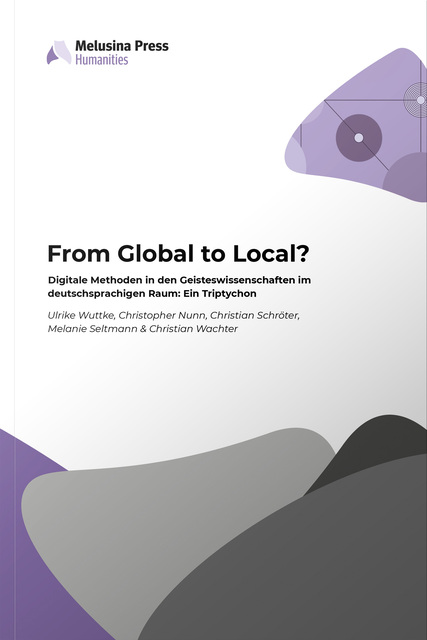
Ulrike Wuttke, Christopher Nunn, Christian Schröter (geb. Vater), Melanie Seltmann & Christian Wachter
https://doi.org/10.26298/1981-5722
Christian Wachter leitet das Service Center for Digital Humanities (SCDH) der Universität Münster.
Der Sammelband “From Global to Local? Digitale Methoden in den Geisteswissenschaften im deutschsprachigen Raum: Ein Triptychon” lädt dazu ein, lokale und globale Geschichte(n) des Einsatzes von digitalen Methoden in den Geisteswissenschaften im deutschsprachigen Raum zu entdecken und über ihre Zukunft nachzudenken. Er bietet Standortbestimmung genauso wie Experimente in der Gegenwart und Gedankenspiele für die Zukunft. Er ergründet Entwicklungslinien und stößt kritische Diskussionen an.
Der Teilband „Be-Forschen“ sammelt diskursive Aufsätze und eine Vielfalt der Themen, der Teilband „In eigenen Worten“ Audio-Essays mit einer Vielfalt der Stimmen und der Teilband „Artefaktbiographien“ Portraits (digitaler) Objekte und eine Vielfalt der Medialität. Der Aufbau als Triptychon führt die (neuen) Formate fruchtbar zusammen, spiegelt den Medienwandel und zeigt dabei überraschende Perspektiven auf. Dies spiegelt die Vielfalt der methodischen Ansätze der Digital Humanities, ganz unabhängig davon, ob man sie als Big Tent oder als globales (Zelt-)Dorf begreift.
Reframing Failure in Digital Scholarship

Anna-Maria Sichani & Michael Donnay (Hrsg.)
https://doi.org/10.63674/yrab7358
Failure is ordinary. From technological failures and computational obsolescence to rejected applications and challenging collaborations, failure is an unavoidable part of any scholarly endeavour. This is especially true for digital scholarship, as the everyday risk of failure is compounded by the challenges of interdisciplinary research and fragility of digital technology.
Reframing Failure in Digital Scholarship tackles what failure – in all its messy but immensely valuable complexity – means for the digital humanities community head-on. It brings together a diverse, interdisciplinary and international group of scholars and practitioners that each offer short personal and professional reflections on the failed, broken or challenging aspects of scholarly practice. It provides a critical perspective on the ways institutional and material conditions are intractably linked to approaches to digital research, and how those conditions differ within and across national contexts.
In creating a critical, constructive and compassionate vocabulary for failure, this book normalises failure as an object of inquiry, asking: if there is value in failure in digital scholarship, how do we create the space to fail ‘better’?
Schreibe einen Kommentar