

In der letzten Zeit sind u.a. diese frei verfügbaren Titel erschienen:
Automated Text Recognition: Theory, Platforms, Best-Practices
Michael Schonhardt, Tim Geelhaar, Tobias Hodel und Jan Odstrcilík
https://doi.org/10.64136/nrlj5339
The diverse landscape of platforms and recognition systems in the field of Automated Text Recognition (ATR) offers significant opportunities for the digital analysis and exploitation of handwritten sources. At the same time, in this complex and rapidly evolving field, established concepts of text processing and analysis quickly reach their limits.
This book provides scholars in the humanities with guidance by presenting technologies, platforms, key concepts, and case studies. It helps readers develop algorithmic literacy, enabling them to carry out both small- and large-scale projects using current technologies, as well as to engage with future developments in the field of ATR.
Digital Modernity: Why We Need to Think Historically About the Digital Age
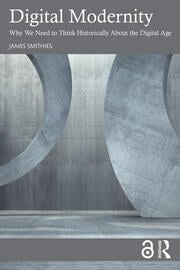
James Smithies
https://doi.org/10.4324/9781003684398
This is the first systematic theorization of digital modernity, arguing that the digital age cannot be understood apart from the long historical arc of modernity.
Bridging digital humanities, critical theory, sociology, philosophy, and global history, Digital Modernity demonstrates that contemporary digital systems are continuations rather than ruptures of the modern project. It offers a robust conceptual framework for examining how technological infrastructures intersect with democracy, governance, colonial legacies, and the public sphere. Across nine chapters, the book moves from conceptual foundations to future-facing proposals. Topics include the cultural logic of Silicon Valley, digital colonialism, digital infrastructure, and the epistemic crisis of the digital public sphere. It also engages philosophical questions about emergence, historicism, and artificial intelligence. Drawing on applied digital humanities, the book rejects technological determinism while offering accessible accounts of computing’s technical and political histories. Readers benefit from a coherent theoretical lens that integrates history with socio-technical critique, enabling a clearer understanding of digital modernity’s present and future stakes.
This book is intended for scholars and students across digital humanities, media and communication studies, science and technology studies, sociology, the philosophy of technology, and modern history. Its interdisciplinary scope also supports research and teaching in software studies, critical AI, infrastructure studies, and global modernities. Suitable for advanced undergraduate and postgraduate courses, it will be especially valuable for researchers seeking to historicize digital systems while advancing critiques grounded in cultural theory, political economy, and postcolonial perspectives. By placing the digital within a longer history of modernity, the book offers both a foundational text and a springboard for further research in critical digital studies.
Editionswissenschaft – Textkritik – Digital Humanities
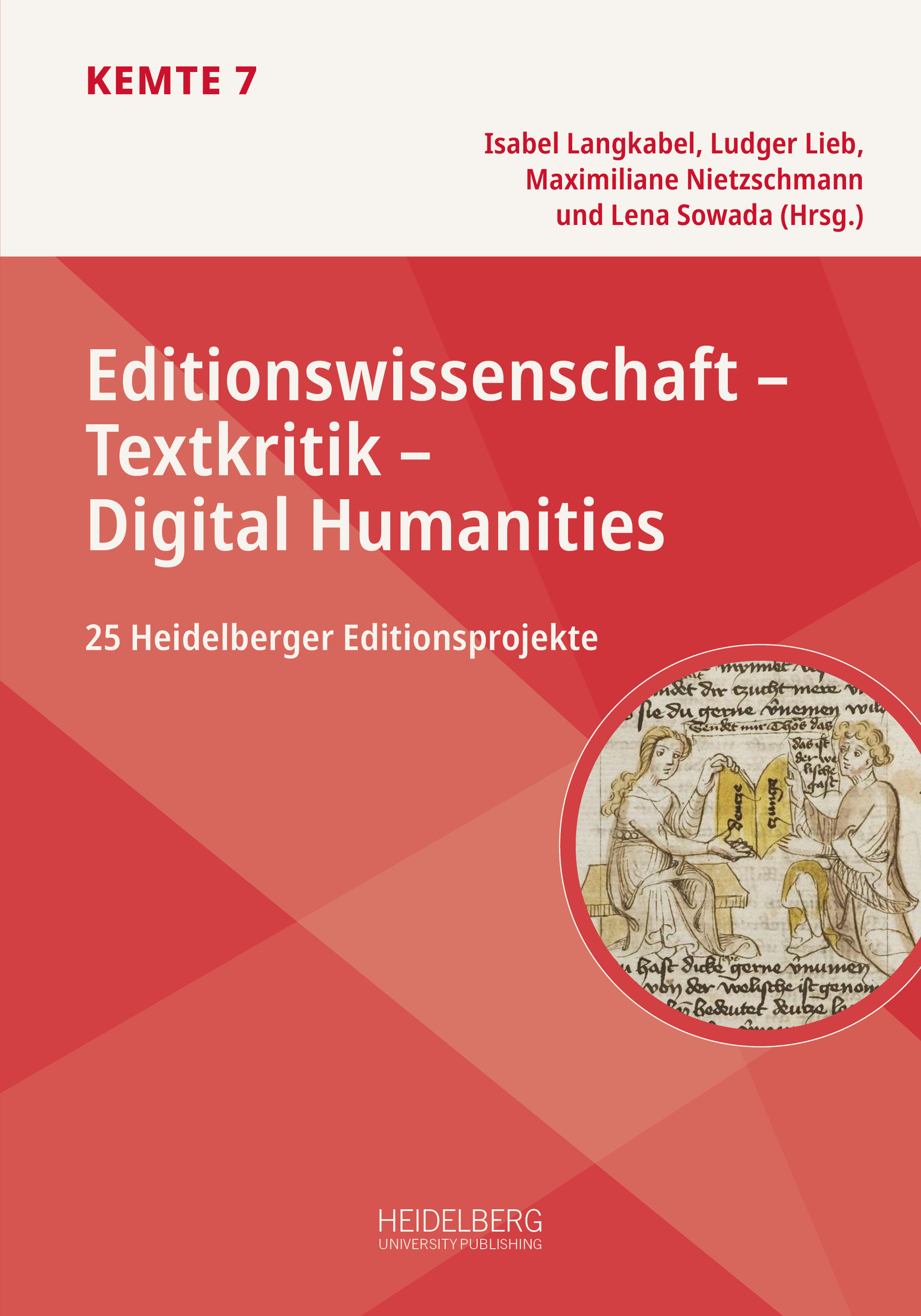
Isabel Langkabel, Ludger Lieb, Maximiliane Nietzschmann & Lena Sowada (Hrsg.)
https://doi.org/10.17885/heiup.1634
Der interdisziplinäre Sammelband stellt 25 Editionsprojekte der Universität Heidelberg, der Heidelberger Akademie der Wissenschaften und der Hochschule für Jüdische Studien Heidelberg vor, die sich mit der Erschließung vielfältiger Texte aus verschiedenen Epochen und in unterschiedlichen Sprachen beschäftigen. Die Beiträge reflektieren den Einsatz digitaler Werkzeuge und editorischer Methoden zur Aufbereitung und Analyse der überlieferten Texte.
Der Band gibt vielfältige Einblicke in die editorische Praxis und zeigt, wie Editionsprojekte in den Geisteswissenschaften dazu beitragen, nicht nur neue Erkenntnisse zu gewinnen, sondern diese auch im Zuge der digitalen Transformation nutzbar zu machen.
Schreibe einen Kommentar