

In der letzten Zeit sind u.a. diese frei verfügbaren Titel erschienen:
Hurt Feelings: Wounding Oneself in Early Modern Literature
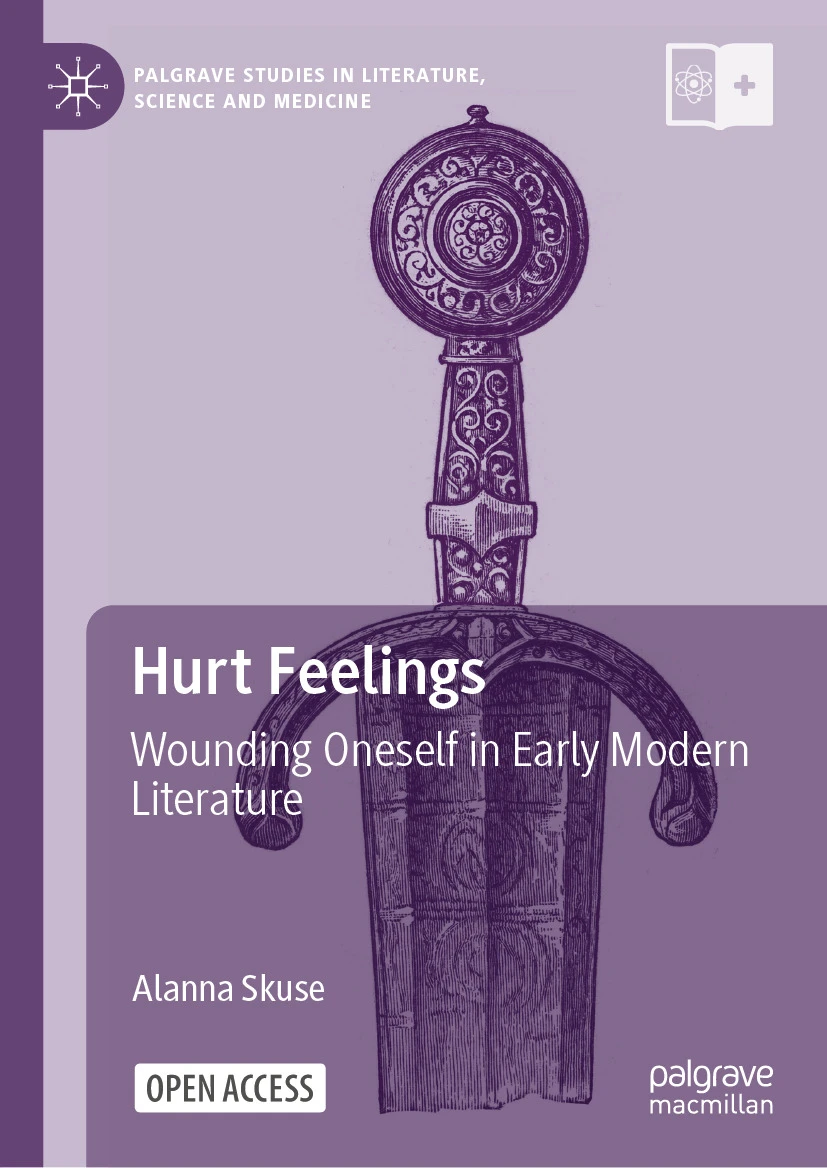
Alanna Skuse
https://doi.org/10.1007/978-3-032-04565-2
This open access book offers the first full study of the phenomenon of self-wounding as it is represented in early modern literature. It looks at depictions of self-injury in ballads, plays, medical texts and histories from the 1580s to the turn of the eighteenth century.
In this period, it argues, self-injury was not necessarily viewed as indicative of psychological distress, as it is in modern discourses of ‘self-harm’. Rather, self-wounding might work as a form of protest, a persuasive tactic, a means of self-regulation or an assertion of agency over one’s own body. This book blends traditional literary studies methodologies with insights from sociology, emotion studies, cognitive psychology and practice-led research to shed new light on early modern ideas about rhetoric, authenticity, emotion, and the relationship between body and identity.
The book also confronts the difficulties of examining such ‘topical’ phenomena. Can the anachronism of comparisons between modern and historical self-injury be made productive, rather than reductive? What does it mean to talk about ‘self-injury’ in a period which did not have a distinct word for these practices? In so doing, it suggests new directions for literary-historical studies of the body and its practices, arguing that in such cases, we should seek not to familiarise the past but to defamiliarize the present.
Mirrors in Shakespeare and Early Modern English Drama: Power, Gender and the Magic of the Theatre

Valentina Finger
https://doi.org/10.5040/9781350535381
Mirrors in the early modern playhouse function as figures of theatricality, reflecting gender dynamics and challenging sovereign power, in this open-access study of their use as stage props and rhetorical devices in plays by Shakespeare and his contemporaries.
Combining approaches from literary studies and performance studies with extensive research into material history, Valentina Finger highlights the rich complexity of mirrors and acts of mirroring on the early modern stage. The case studies in this book traverse myths of monarchs and imperial mirrors in Richard II and Macbeth, explore acts of exemplary self-government and court politics in Edward I and Bussy D’Ambois, constitute cosmetic mirrors as canvases for feminine self-authorship in The Duchess of Malfi and The Devil’s Charter and illuminate the interplay of scientific knowledge, magic and trick glasses in The Alchemist and A Game at Chess. Within this range of Shakespearean drama and lesser-studied plays by Shakespeare’s contemporaries, each chapter examines political and literary history, material and visual culture, as well as gender and power dynamics. Focusing on the roles of mirrors as props and tropes in the early modern playhouse, this book contributes to our understanding of broader cultural, social and religious norms as they were debated in England around 1600.
Queer Pregnancy in Shakespeare’s Plays
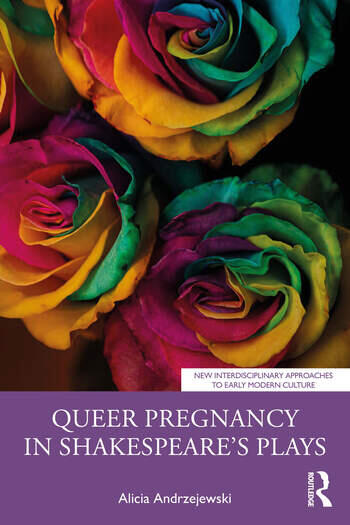
Alicia Andrzejewski
https://doi.org/10.4324/9781003270348
Queer Pregnancy in Shakespeare’s Plays addresses a conspicuous absence in queer readings of Shakespeare’s work: the pregnant body. Through discussions of A Midsummer Night’s Dream, Titus Andronicus, All’s Well That Ends Well, Hamlet, and The Winter’s Tale, this book dismantles the heteronormative frameworks through which pregnancy continues to be read.
Its chapters challenge the assumptions in queer theory that only straight women get pregnant, that every pregnancy ends in the birth of a healthy, legitimate child, and that pregnancy always reproduces the family in a recognizable form. These frameworks not only dull the transgressive force of pregnancy in Shakespeare’s work and the expansive ways in which early moderns thought about the pregnant body, but contribute to the erasure of so many lived experiences of pregnancy in our current, cultural imagination. The concept of “queer pregnancy” not only reorients scholars to pregnancy in Shakespeare’s plays and beyond — it illuminates how high the stakes are for pregnant people who continue to be read and treated through perspectives that do not take queer bodies and identities into account.
Through queer methodologies, as well as an explication of early modern gynecological texts, receipt books, and botanicals, this book offers new possibilities for how Shakespeare might have encountered and understood pregnancy, making it a valuable resource to students, scholars and anyone interested in Shakespeare, queer and feminist studies, and early modern culture.

Schreibe einen Kommentar